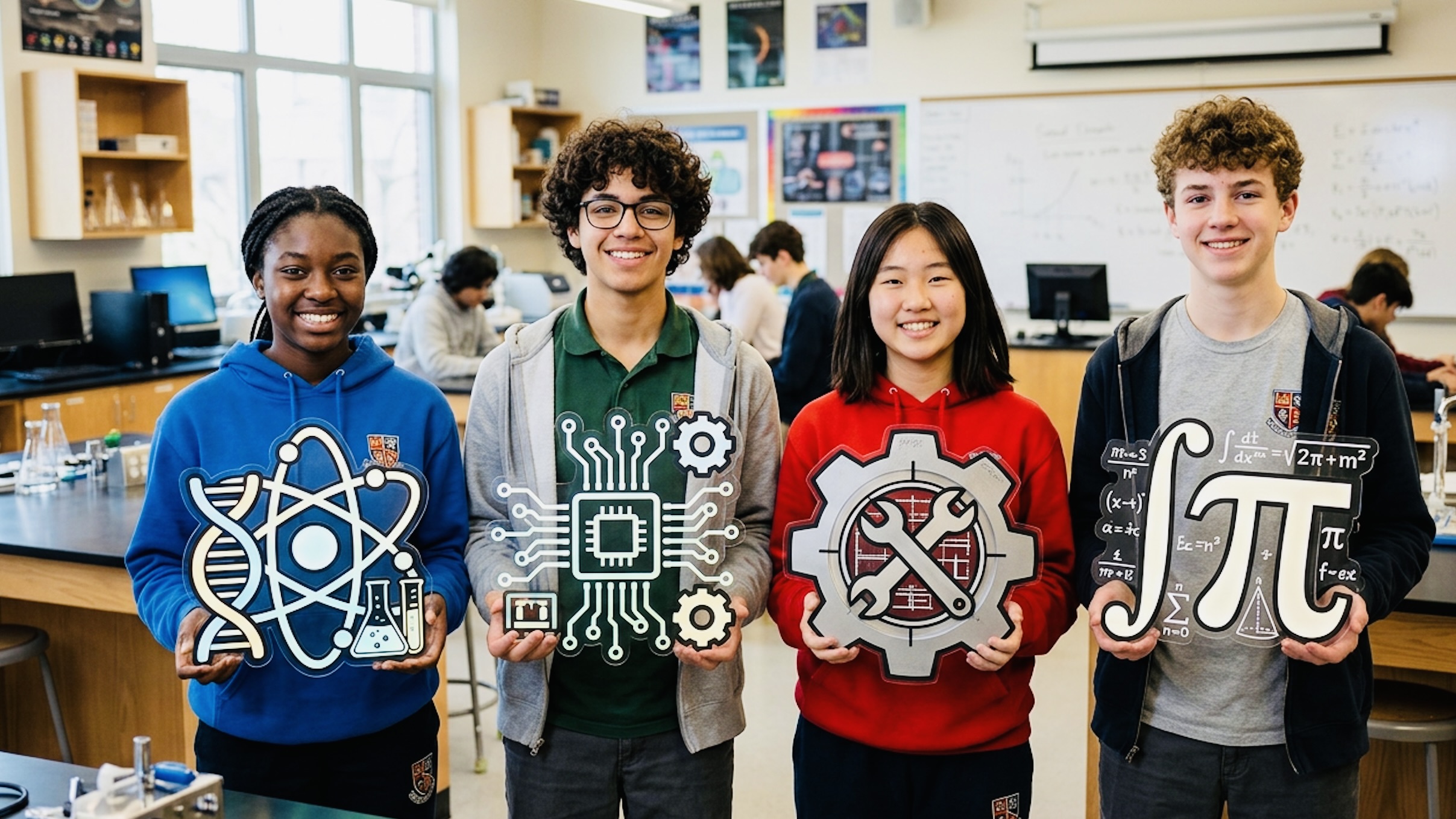
 STEM education, which stands for Science, Technology, Engineering, and Mathematics provides the tools to build the future and many of it components are generally mandatory of core curriculum at key stage 1- 4 / ages 5-16 / in UK and European Education as they are considered essential skills. It vary slightly depending on the student's age (Key Stage): Mathematics, Science and Computing are compulsory at all key stages 1- 4; Design&Tech is compulsory at Primary and Lower Secondary Level and Optional at GCSE Level; Engineering is not taught at Primary and it is optional at Lower Secondary and GCSE level. STEM subjects in high education often been provided with extra funding due to their strategic importance to the economy.
At its core, STEM education provides the technical skills to innovate, as its pillars bridge the gap between “what if”/ imagination / and “what is“/ implementation /. It focuses on development of critical thinking, problem solving skills and dealing with complex problems in various fields; technical literacy; preparation for STEM career; learning by doing and PBL /Project Based Learning/. Among other skills, many STEM projects promote teamwork and developing collaborative skills.
STEM is crucial for solving immediate technical challenges. It is the primary driver of economic growth and solutions for global demands like climate change and disease.
However, it faces many challenges: lack of equity, insufficient resources; teacher shortage, solving key ethical questions in fields of Technology and AI / data privacy, algorithmic bias /; Science and Bioethics / cloning, genetic testing and editing( CRISPR ), human-animal chimeras /; Engineering and Environment / environment impact and sustainability /. |